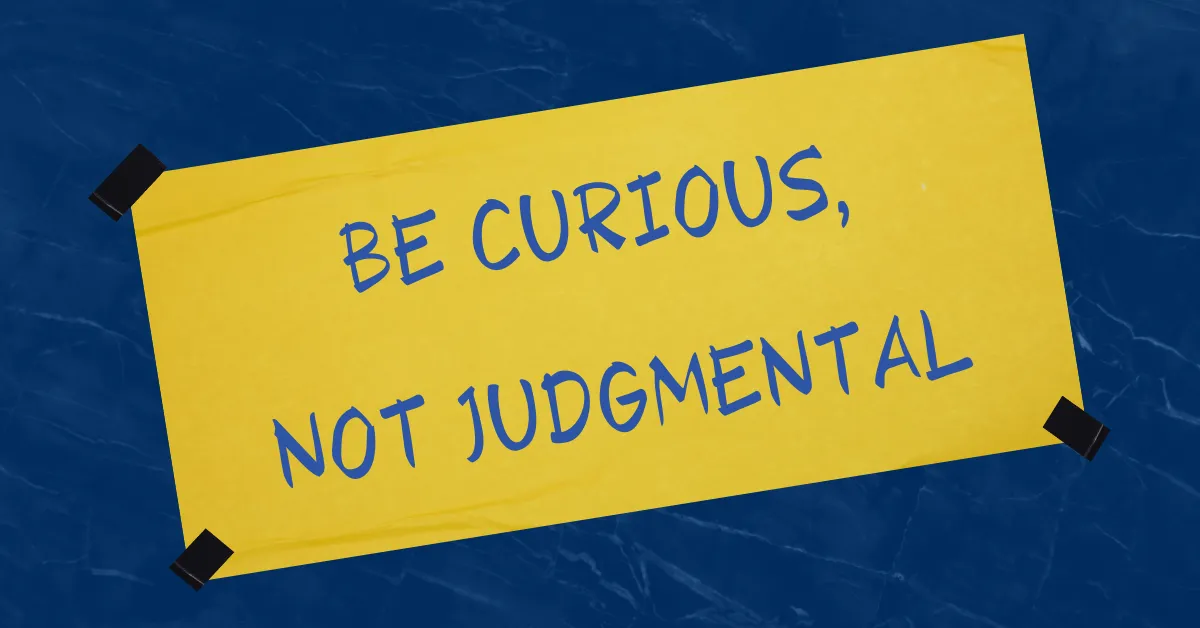
Watching the Ted Lasso series with my son for the umpteenth time (yes, we’ve reached the point of reciting the lines along with the actors), one scene in particular amazes me every time. Standing before a dartboard facing an arrogant rival, Ted drops the line that changes everything:
“Be curious , not judgmental” (Attributed to Walt Whitman).
Simple on the surface. Revolutionary when you truly lean into it.
It is a blunt challenge to our very identity as leaders.
The "Expert" Trap
We often become managers because we know. Gradually, we buy into the myth that leadership is synonymous with having all the answers.
The problem? Certainty is the graveyard of growth.
The moment we judge without curiosity (“It won't work,” “He lacks leadership,” “I already know the answer”), we bolt the door to learning. We become static in a dynamic environment. This knee-jerk judgment doesn’t just limit how we see others; it paralyzes our own evolution.
Curiosity: The Bridge to Psychological Safety
Psychological safety thrives in the “interstices” of silence — those brief moments where a leader pauses and listens before taking aim.
By being curious about your ideas, I send a powerful signal: “Your perspective has value — especially if it challenges mine.”
This is the tipping point where your team stops telling you what you want to hear and starts telling you what you need to hear. Believe me, that is the threshold you want to cross.
The “Pro” Level: Self-Curiosity
The most demanding form of curiosity isn't directed outward; it’s the curiosity we apply to ourselves.
It’s easy to blame a colleague’s behavior. It’s far more courageous to ask: “What part of me contributed to this situation?”
Instead of asking, “Why is my team lacking initiative?”
Try: “What am I doing — consciously or not — that makes them feel their initiative isn't welcome?”
As Marnie Stockman and Nick Coniglio remind us in Lead It Like Lasso, leadership isn’t a destination of perfection; it’s a continuous exploration.
Three Exercises to Muscle Your Curiosity (and Challenge Your Ego)
Shift the Question Mark. In your next meeting, if frustration rises over an idea you dislike, don't pivot to a decision. Count to three and ask: “Can you help me see what I’m missing here?”
Try the Reverse Interview. Regularly ask a team member (vary the person): “What have I done recently that dampened your creativity or enthusiasm?” Then, listen with the detachment of an anthropologist — no justifications allowed.
Go Off-Road. Curiosity is a muscle. Take up a hobby completely unrelated to your work (beekeeping, woodworking, molecular gastronomy). Relearning how to be a beginner reminds your brain how to stay open and observant.
LeaderZone Challenge
You are paid for your discernment. Making sound judgments is perhaps your most vital daily skill. But for a judgment to be ‘sound” rather than “prejudicial”, it must pass through the filter of curiosity.
Curiosity isn’t a waste of time; it’s an investment in the accuracy of your decisions. A curious leader ensures they see the entire board before throwing their darts.
Your challenge: Delay your next judgment by just three minutes. Ask one more question. Observe how the quality of your final decision improves.
As Ted showed us at the dartboard: It’s better to aim true than to shoot fast.